AMN Plus-June 16, 2026
Ethiopia is undertaking an ambitious national transformation through large-scale projects and strategic policies designed to build its economic sovereignty on a solid and self-reliant foundation. Beyond supporting the country’s aspiration for rapid and sustainable growth through its own capabilities and resources, these initiatives are also intended to strengthen Ethiopia’s resilience against external economic pressures, global shocks, and future uncertainties.
Speaking during the inauguration ceremony of the Grand Ethiopian Renaissance Dam (GERD), Prime Minister Abiy Ahmed (PhD) announced seven mega projects that Ethiopia plans to implement at an estimated cost of 30 billion U.S. dollars. The projects, scheduled to be carried out over the next five to six years, are expected to reshape the country’s economic landscape and significantly enhance its productive capacity.

The seven flagship initiatives include the development of a nuclear plant, the construction of Africa’s largest airport, the inauguration of a gas processing plant, the realization of an oil refinery project, the establishment of a second gas plant, the launch of a fertilizer manufacturing facility, and the construction of more than 1.5 million housing units across the country.
Once completed, these strategic undertakings are expected to substantially strengthen Ethiopia’s economic competitiveness within the region while creating opportunities for industrial expansion, job creation, technological advancement, and long-term national prosperity.
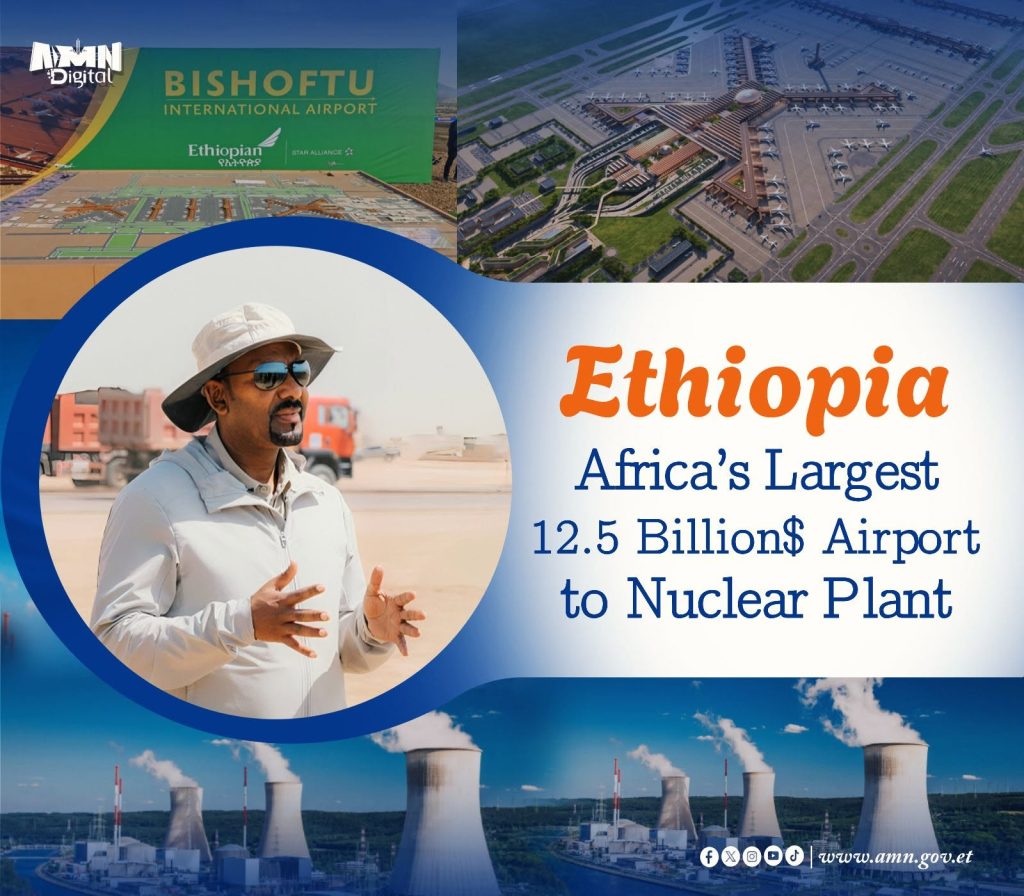
As part of this broader national vision, the construction of the Bishoftu International Airport, the largest airport project ever undertaken in Africa, has officially entered the implementation stage. It may be recalled that on January 10, 2026, when Prime Minister Abiy Ahmed (PhD) formally launched the project, he emphasized that Ethiopia’s strategy of expanding and modernizing its airport infrastructure is designed to position the country as Africa’s leading aviation hub in the years ahead.
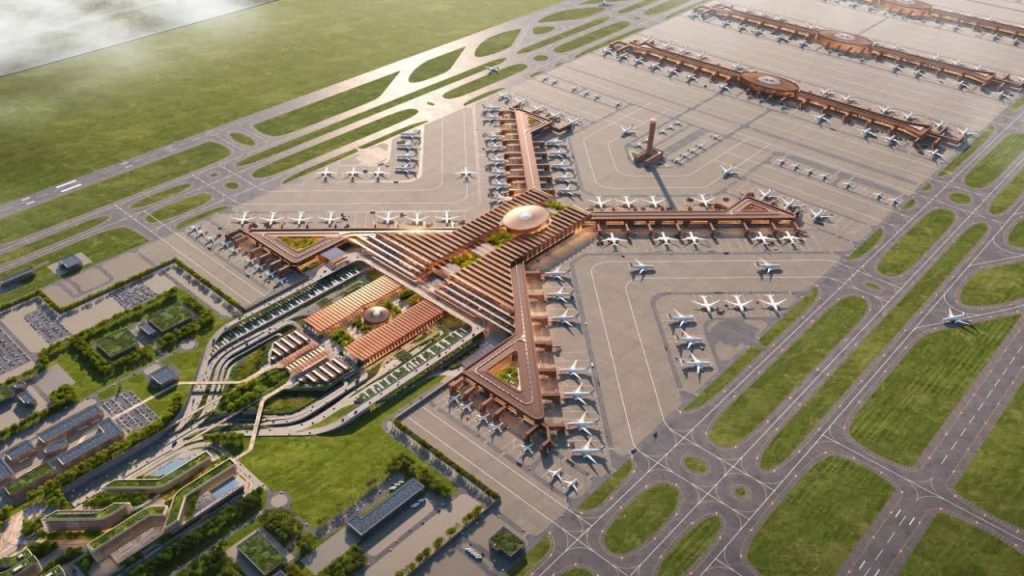
Located approximately 40 kilometers southeast of Addis Ababa, the Bishoftu International Airport is being built on a 3,500-hectare site situated at an altitude of 1,910 meters above sea level. With an estimated investment of 12.5 billion U.S. dollars, the project represents one of the largest infrastructure commitments in the continent’s history.
Upon completion of its first phase, the airport is expected to accommodate 60 million passengers annually. At full master-plan capacity, it will be capable of serving 110 million passengers each year, approximately 4.4 times the capacity of the existing Bole International Airport. This expansion is anticipated to position Ethiopia among the world’s foremost aviation centers, significantly enhancing connectivity across Africa and beyond.
Prime Minister Abiy Ahmed (PhD) recently visited the construction site to assess the progress of the massive undertaking. During the inspection, he stated that by confronting challenges directly and delivering the project within the planned timeframe, Ethiopia would demonstrate to the world that not only Ethiopia, but Africa as a whole, possesses the capacity to think boldly, plan effectively, work diligently, and produce tangible results.
The Prime Minister described the airport as a monumental project capable of inspiring and energizing the entire African continent. He further noted that the Bishoftu Airport project is unprecedented in both Ethiopian and African history in terms of its scale, financial investment, and the magnitude of machinery deployed, adding that construction is advancing at a remarkable pace.
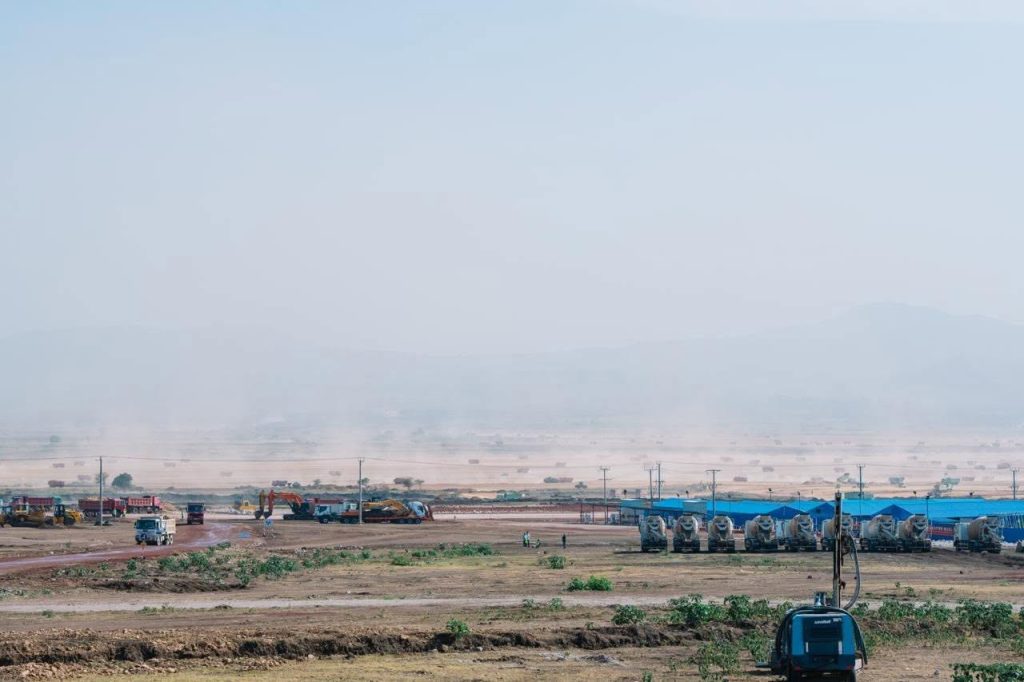
According to the Prime Minister, more than 8,000 workers and nearly 4,000 machineries and vehicles are currently engaged on the construction site. Modern technologies have also been integrated into the project’s management system to ensure efficiency and accountability.
The movement and operational activities of every machine are being monitored in real time through drones, digital dashboards, and virtual tracking technologies. This sophisticated system, the first of its kind in Ethiopia, is expected to serve as a model for overcoming delays and cost overruns that often challenge large national projects. By enabling continuous oversight and data-driven decision-making, the approach aims to ensure that construction is completed on schedule and in accordance with the highest standards of quality.
Guided by the philosophy of Medemer, Ethiopia continues to challenge long-standing perceptions that it “cannot succeed.” Through determination, collective effort, and a commitment to implementation, the country is increasingly translating national aspirations into measurable achievements delivered within defined timelines.
Mega projects such as the Bishoftu International Airport are envisioned not merely as infrastructure developments, but as investments in the future, projects designed to secure economic independence for generations to come, create new opportunities for millions of citizens, and elevate Ethiopia’s standing among the world’s leading aviation nations.
As construction progresses, the Bishoftu International Airport stands as a symbol of Ethiopia’s ambition, confidence, and belief in its capacity to shape its own destiny.
Upon completion, the project will not only redefine Ethiopia’s aviation sector but also stand as a powerful testament to Africa’s capacity to envision, execute, and deliver transformative projects of global significance.
By Birhanu Workneh