
AMN PLUS-August 26, 2026
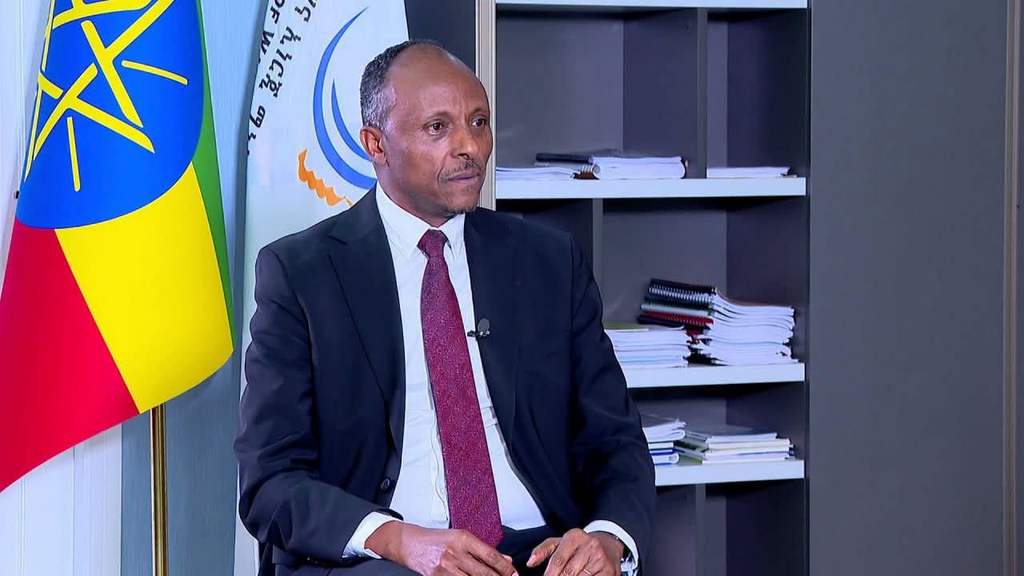
In an interview with Pulse of Africa, Minister of Water and Energy Eng. Habtamu Etefa (PhD) said that Egyptians do not want to see any development on the upstream side.
“Our brothers from Egypt’s side don’t want to see any development on Nile River basin tributaries. Because they value the water, they don’t value our people. They value the Nile, but they don’t value people on the upstream side. That is why their mindset is always going back to the colonial mentality,” he said.
Minister Habtamu further criticized Egypt for what he described as an attempt to deprive Ethiopia of its right to the Nile River.
“To deprive us of the right to the Nile River, the right to use the water, is to say Ethiopia has zero share in that agreement. This is, honestly speaking, a very terrible concept, which they still quote about. That is their slogan,” he said. However, he expressed Ethiopia’s firm position on the use of the Nile. “Ethiopia is saying, no, it is for every one of us. If we say it’s for every one of us, the Nile is enough for Ethiopia, the Nile is enough for Sudanese, and the Nile is enough for Egyptians,” he underlined.
Eng. Habtamu said Ethiopia’s approach is based on the principle that the Nile should serve the three countries downstream and that Ethiopia should be able to develop its water resources.
“When it is going to the three of them downstream, which is the concept that we are using, Ethiopia has been building projects on the Blue Nile. And we will keep on building in the future as well,” he said.
Eng. Habtamu explained that, in Ethiopia’s view, the purpose of its water-development projects is to benefit its citizens while also improving conditions for downstream countries.
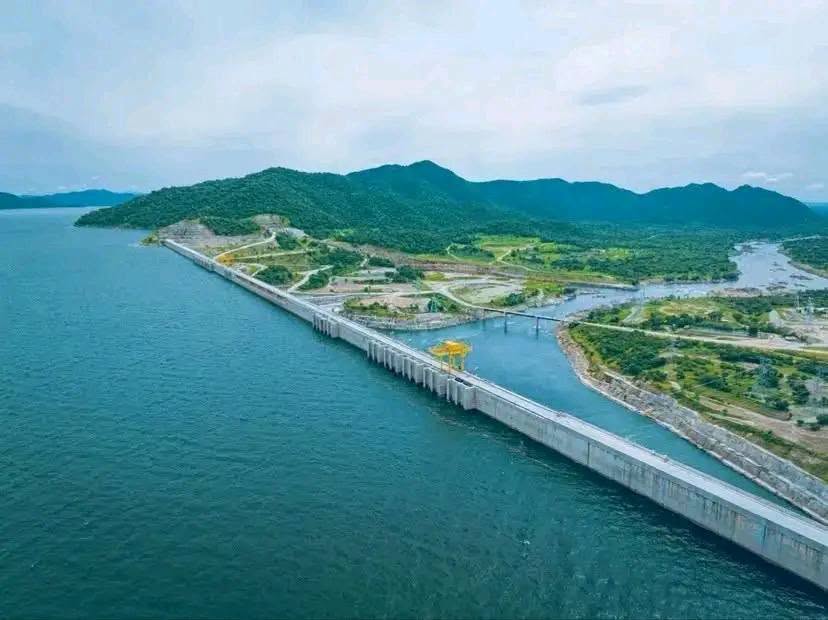
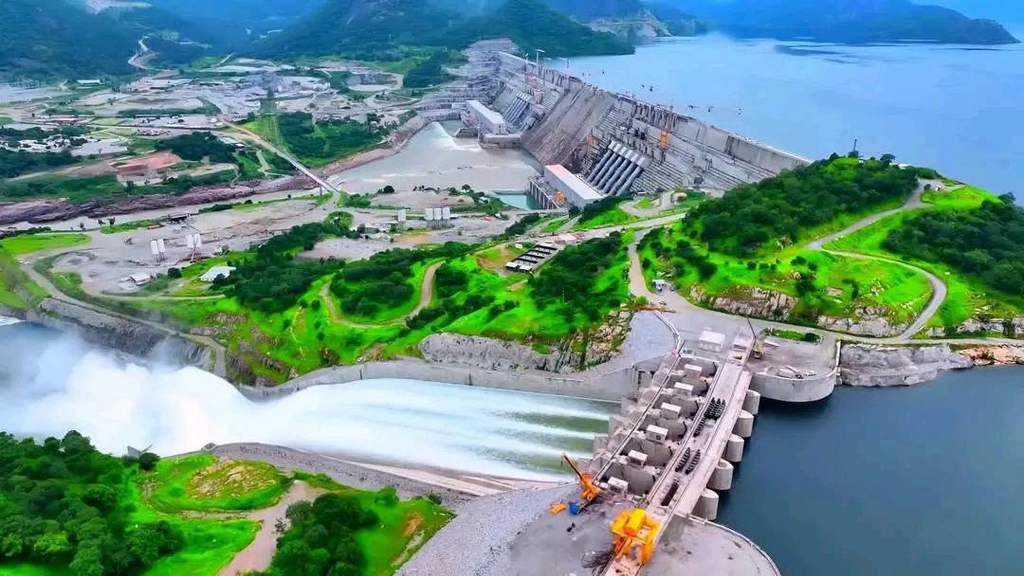
“Because the intention of our development is to benefit our people and then still make our brothers on the downstream side safer. The reason why we built such a huge dam is not for ornamental purposes or for beautification. It is for development. So we have to use it,” he argued.
He said Ethiopia needs to manage, regulate, and store water in order to meet its energy needs. “To use the water, we have to control it. We have to balance it. We have to regulate it, because we need power demand.
“So, the 5.15 gigawatts of power that the dam is designed to generate cannot simply be achieved unless we manage the water, unless we store the water, unless we regulate it. This is why it was built,” he said.
According to Minister Habtamu, Ethiopia’s development activities should not be viewed as harmful to downstream countries.
“Development in Ethiopia is not hurting our brothers on the downstream side. This is what has to be clearly seen,” he said.
He also argued that Ethiopia’s regulation of the river through dams provides benefits to downstream countries.
“We have been building the dams, and the dams are intended for our development through controlling the water. Controlling the water does not mean that we are preventing them from using water from the Nile,” he said.
“Rather, they are gaining more advantages after Ethiopia started regulating the water. The amount of sediment that they used to receive every year and that was supplied to the Aswan Dam has been reduced today, honestly speaking, for two reasons.
“One reason is because of the development on the upstream side that we have undertaken, such as watershed management,” he explained.
Minister Habtamu also highlighted Ethiopia’s watershed-management and tree-planting efforts, saying they contribute to the country’s efforts to improve its water resources.
“The green legacy is that every citizen in Ethiopia has been spending a minimum of three months every year planting trees and taking care of them.
He described these activities as an investment in Ethiopia’s natural resources.
“It is an investment. This is something that we are not simply doing in that way. Every student, every citizen in Ethiopia has been mobilized to do that.
“So, the reason why we are developing our watershed is to enrich our water resources. The reason why we are enriching our water resources is not simply to spill the water out. It is to develop it for our purposes,” he said.
He concluded by reiterating Ethiopia’s position that it should be able to use the Nile for its own development while taking the interests of downstream countries into consideration.
“But from the Ethiopian side, we do use it for ourselves, and then we also give consideration to the downstream side. So, that is the balanced idea that has to be taken,” he said.
By Leta Teresa