
AMN Plus-October 8, 2026
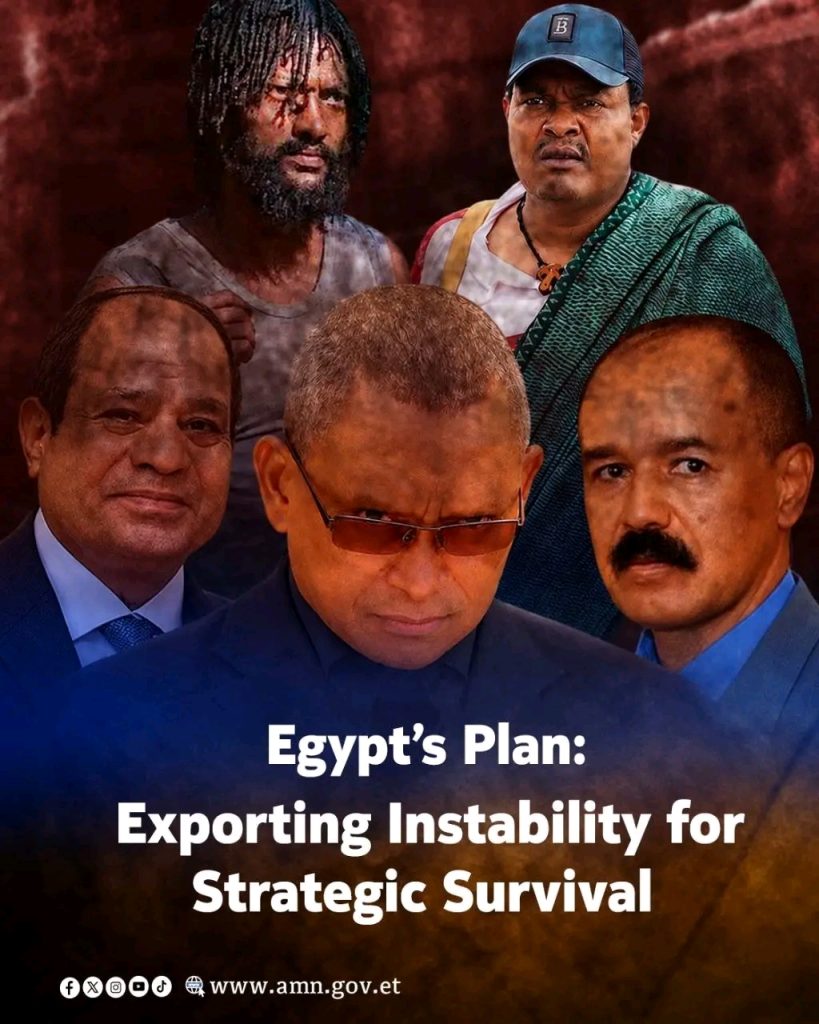
Ethiopia’s legitimate national interests cannot be compromised by Egypt’s “encirclement” strategy
The recent quadrilateral meeting involving Egypt, Eritrea, Sudan, and Somalia—hosted by Egypt in El Alamein on October 4, 2026—pushes the peace and stability of the Horn of Africa into an increasingly precarious phase. The four nations have secretly agreed to “jointly handle military and security intelligence” should a conflict erupt along their borders with Ethiopia. While this strategy of “encirclement” targeting Ethiopia is not new, it clearly illustrates Egypt’s long-standing geopolitical plot to project its own internal and external crises into the region and to obstruct Ethiopia’s legitimate development.
Ethiopia has consistently maintained a firm stance: political provocations, coercive diplomacy, or attempts to instigate regional instability cannot in the slightest diminish Ethiopia’s legitimate and sovereign interests regarding the Nile River and the Red Sea.
In an effort to sustain its historical mistake of monopolizing the Nile River for centuries, Egypt is striving to exploit the internal vulnerabilities of Horn of Africa nations for its own benefit. At a time when Sudan is bleeding from an internal war, Somalia faces the challenges of terrorism and state-building, and Eritrea calculates its regional diplomatic interests, Egypt’s desire to align these nations against Ethiopia is intended to execute its own anti-Ethiopia agenda. The agendas upon which this coalition has formed a front violate Ethiopia’s legitimate rights rather than ensuring regional peace.
The Grand Ethiopian Renaissance Dam (GERD): Egypt still clings to colonial-era water-sharing treaties, seeking to deny Ethiopia—the source of 85% of the Nile’s waters—its right to development. Ethiopia, however, has practically demonstrated its “can-do” spirit and its right to utilize its natural resources by constructing and completing the dam with its own resources, filling it, and generating power.
The Red Sea and Sea Access Interest: For Ethiopia, a nation of 130 million people, securing access to the sea to guarantee its economic prosperity and security is a legitimate and strategic interest. This desire is based on peaceful means and the principle of mutual benefit (Win-Win), and is not aimed at infringing upon any country’s sovereignty. Nevertheless, Egypt continues to stoke regional tensions by portraying this existential quest of Ethiopia as a threat.
The fresh internal disagreements and tensions that have arisen in northern Ethiopia (between Mekelle and Addis Ababa) are strictly the country’s internal affairs. However, as demonstrated by the Al-Alamein meeting, Egypt and its allies are lurking to exploit this internal vulnerability as a golden opportunity to pressure and weaken Ethiopia along its borders.
As the Ministry of Foreign Affairs of Ethiopia pointed out in its statement issued, Ethiopia will not compromise its national interests despite its internal challenges. No military agreements or border encirclements can hold back the people and government of Ethiopia. Throughout its history, Ethiopia has accumulated a great historical legacy of uniting to repel and defeat foreign invaders and surrounding forces.
The Solution is Cooperation, Not Encirclement. Egypt’s politics of encirclement is obsolete; it will not bring long-term water security for Egypt, but will only invite further bloodshed and destruction to the Horn of Africa. Ethiopia’s interests are intertwined with those of the region’s countries. Peace in Sudan, stability in Somalia, and development in Eritrea can only be ensured through constructive cooperation with Ethiopia, rather than by fueling the proxy wars and tensions ignited by Egypt. No matter how much diplomatic and military pressure Egypt attempts to mount, Ethiopia’s “legitimate interests and rights” over the Nile River and the Red Sea will remain an inviolable and non-negotiable manifestation of its sovereignty.
By Hussen Kemal