AMN PLUS – July 23, 2026
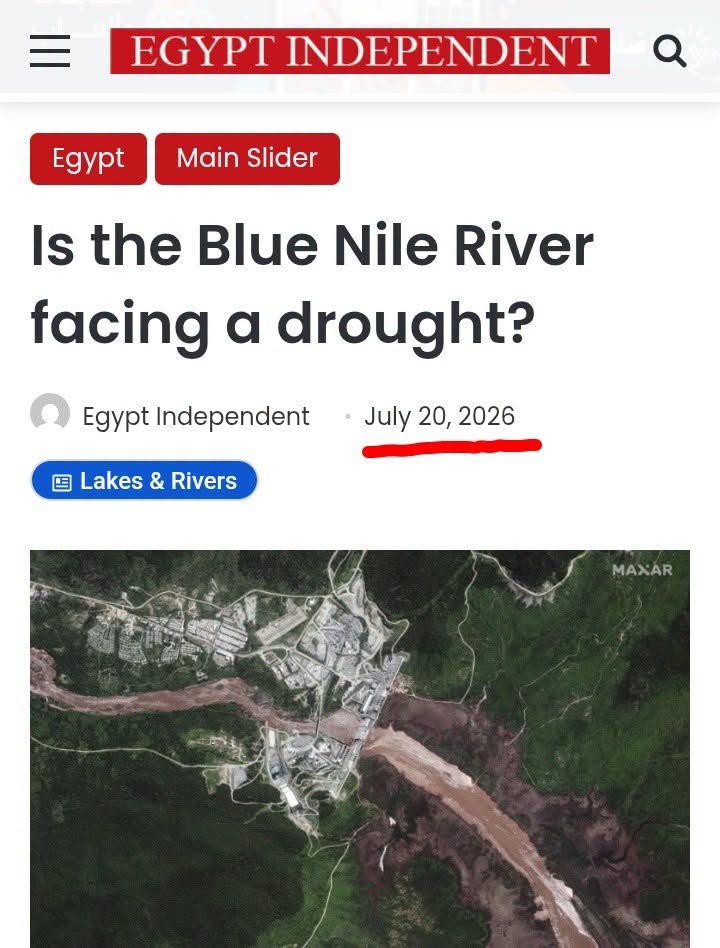
The report and social media post by ‘Egypt Independent’ has sparked concern by asking, “Is the Blue Nile River facing a drought?” while displaying a satellite image of the Grand Ethiopian Renaissance Dam (GERD) prominently labeled as if it reflected conditions in 2026. However, the presentation is misleading.
The satellite image used in the post is not from 2026. It was captured by Maxar Technologies on June 26, 2020, during the early phase of the GERD’s construction—years before the reservoir reached its current storage level. Presenting a six-year-old image without clearly identifying its date creates the false impression that it depicts the dam’s current condition.
The post relies on a dramatic visual and an alarming question rather than providing essential context. By pairing an outdated image with speculation about a drought, it encourages readers to assume that the Blue Nile is experiencing a severe water shortage. Yet the ongoing debate surrounding the GERD is primarily a political and diplomatic issue concerning the management and utilization of Nile waters, not proof of an active environmental crisis.
Notably, the article itself contradicts the impression created by its headline and accompanying graphic.
It quotes Sameh Abdel-Rahman, Deputy Head of the Nile River Water Sector at Egypt’s Ministry of Water Resources and Irrigation, who states that Egypt is not facing a water crisis. Egyptian water officials also reject claims of a natural drought, noting that the annual rainy season is currently underway and that the total volume of this year’s Nile flood cannot be accurately assessed until late August.
These official statements do not support the alarming narrative implied by the social media post.
As discussions over the GERD and Nile water management continue, the use of outdated imagery without clear context risks spreading misinformation and fueling unnecessary public anxiety.
Responsible journalism requires historical images to be accurately dated and properly contextualized, particularly on issues with significant regional and international implications.
By: Tegegn Befekadu