
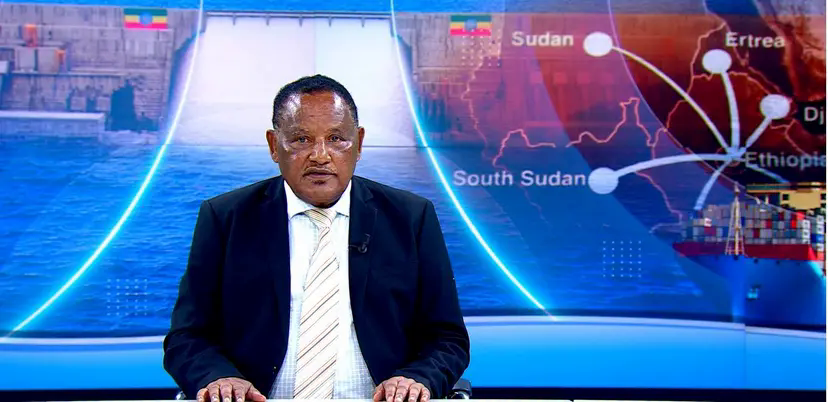
AMN Plus-August 28, 2026
Former Water Minister Shiferaw Jarso called on the Ethiopian government to press Egypt to compensate Ethiopia for the use of Abay (Nile) water resources, underscoring that Ethiopia contributes about 86 percent of the river’s flow.
Ambassador Shiferaw also stressed that Ethiopia should accelerate agricultural productivity by building irrigation dams on the Abay and its other major rivers to ensure comprehensive food sovereignty.
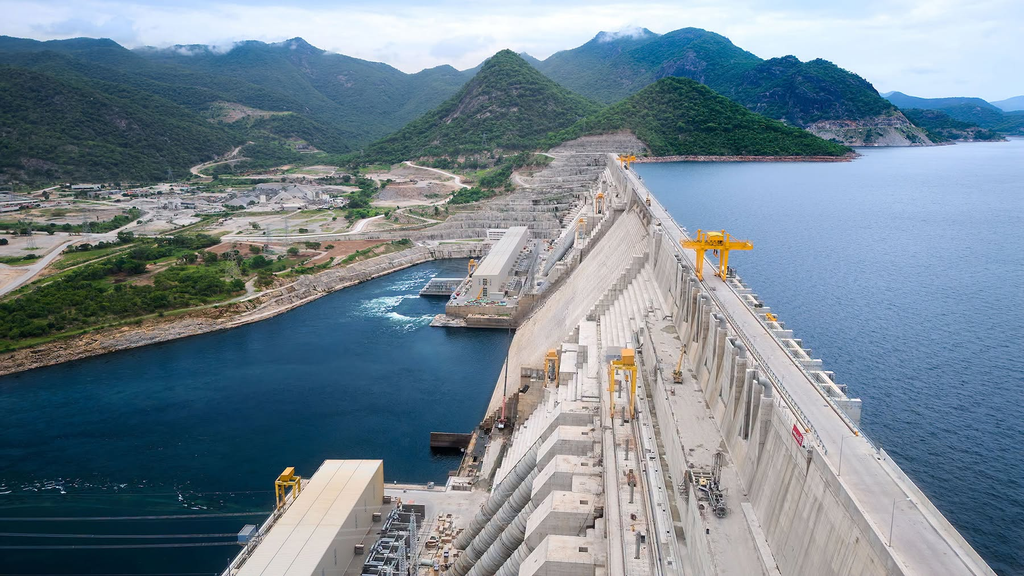
Although Ethiopia remained unable to benefit from its natural resources for years due to what he described as a conspiracy orchestrated by Egypt, Ethiopians broke through the obstacles by constructing the Grand Ethiopian Renaissance Dam (GERD) on the Abay River, demonstrating their unity and bringing a new era of development.
Today, electricity generated by the GERD is being transmitted across borders, creating regional economic benefits.
The regional power interconnection created by the GERD has also become a continental economic integration initiative, openly demonstrating Ethiopia’s African vision of growing together.
Speaking to the Ethiopian News Agency (ENA), former Minister of Water Resources Ambassador Shiferaw Jarso said Ethiopia had been unable to utilize the Abay River for many years because of Egypt’s long-standing policy of seeking to control the river.
He noted that Egypt had promoted a hostile narrative against Ethiopia for decades, resulting in Ethiopia spending years without benefiting from developing its Abay River water resources.
Driven by this determination, Ethiopians in the spirit unity and Pan-Africanism, made the massive international power generation project, the Grand Ethiopian Renaissance Dam (GERD), a reality, Ambassador Shiferaw said.
He further noted that the GERD is a historic generational legacy that has demonstrated Ethiopians’ capacity to deliver on the global stage. The former minister explained that the dam is also providing significant benefits to downstream countries by helping ensure a reliable flow of water and reducing vulnerability to floods and droughts.
Ethiopia’s power interconnections with Djibouti, Kenya, Sudan and other countries in the region are making a significant contribution to accelerating regional and continental economic integration, according to Ambassador Shiferaw.
The regional power interconnection created through the GERD, he said, demonstrates Ethiopia’s potential to strengthen electricity links extending from the southern tip of Africa to European countries.
He explained that reliable energy supply is not only critical for accelerating a country’s development and growth, but also serves as vital infrastructure for realizing a vision of shared growth through cooperation.
Egypt’s narrative portraying Ethiopia as a historic adversary has, on the one hand, linked the water issue with politics and, on the other, continued to affect regional cooperation efforts, Ambassador Shiferaw stressed.
He pointed out that, if countries work in a spirit of cooperation, Ethiopia can regulate the amount of water stored in its dams, reduce flood vulnerability, and develop water management systems that can provide benefits during periods of drought.
The Ambassador stressed that countries should grow together based on the principle of equitable and reasonable utilization. To this end, he urged Egypt to move away from conflict and hostile narratives and embrace a spirit of cooperation.
He said Egypt should abandon its approach of seeking exclusive use of the Abay River and instead work cooperatively so that Nile Basin countries can utilize their water resources equitably and reasonably. He also stated that Egypt should pay an appropriate price for Ethiopia’s 86 percent contribution to the Nile River’s water resources.
Ambassador Shiferaw further stressed that Ethiopia should increase its energy and irrigation capacity by constructing additional dams on the Abay and other transboundary rivers.
The GERD has helped Ethiopia develop the human resources, financial capacity, experience and expertise needed to build additional hydropower dams and irrigation projects.
The former water resources minister explained that Ethiopia should therefore expand irrigation development on the Abay and other rivers and construct dams that can improve agricultural productivity and help ensure food sovereignty.
He said the Nile River Basin Cooperative Framework Agreement (CFA), which aims to ensure the equitable and reasonable utilization, conservation and cooperative development of water resources among Nile Basin countries, is intended to strengthen a joint water management system among the basin states.
Ethiopia, Rwanda, Tanzania, Uganda, Burundi, Kenya and South Sudan have signed the Nile cooperation framework, while Egypt and Sudan, which repeatedly invoke colonial-era agreements, have not signed it.
According to Ambassador Shiferaw, Egypt and Sudan’s refusal to sign the Nile cooperation framework stems from a desire to maintain the unfair colonial-era approach of exclusive utilization.
He said it is an open fact that Egypt’s current efforts to establish cooperation on its own terms, despite the existence of a common Nile cooperation framework, clearly demonstrate that it does not accept equitable joint utilization of the Nile’s water resources, according to ENA.