
AMN PLUS – October 6/2026
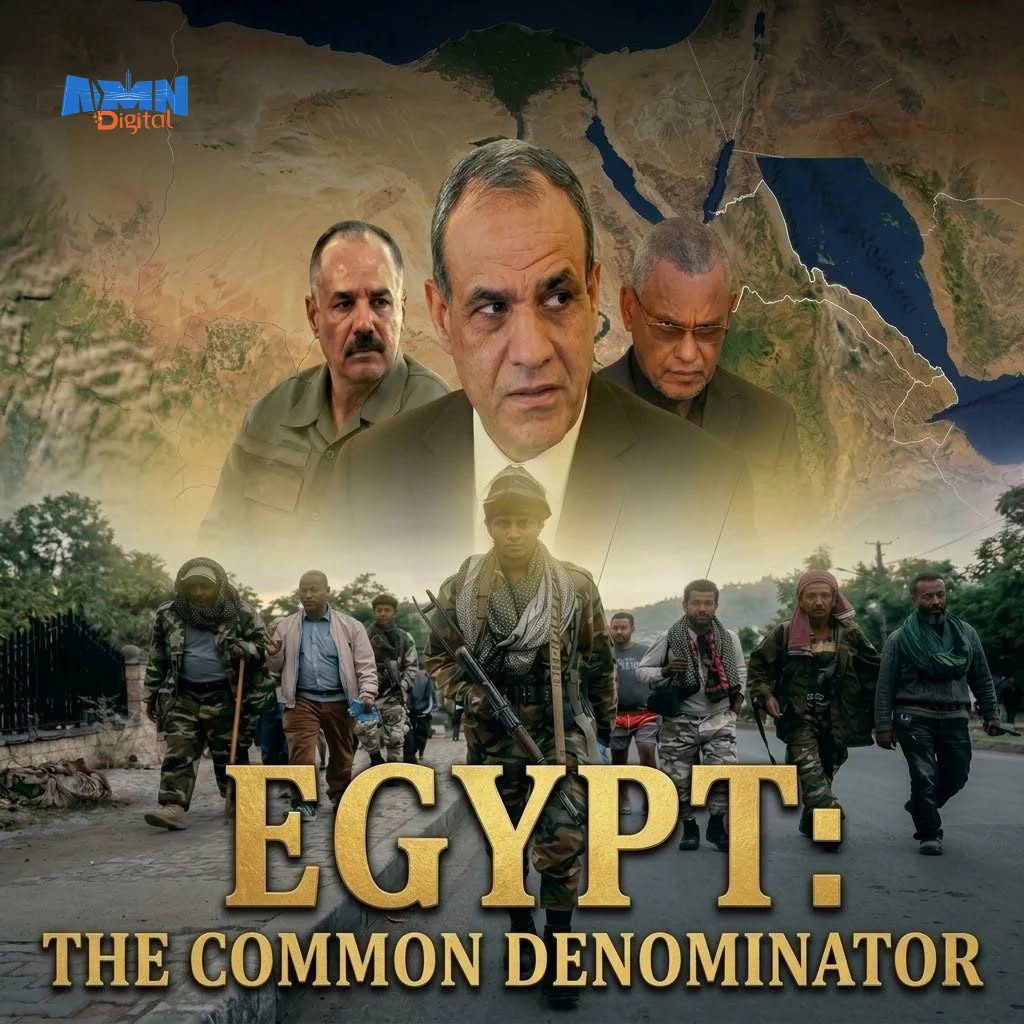
Egyptian Foreign Minister Badr Abdelatty stated in October 2026 that Egypt has no involvement in Ethiopia’s domestic political and military crisis.
He denied allegations that Egypt is complicit in Ethiopia’s internal political and military conflict. However, the Ethiopian government has officially accused Eritrea, Sudan, and Egypt of supporting Tigrayan rebels (TPLF) in the renewed fighting in the north. Both countries expelled each other’s diplomats as a result of this disagreement.
In addition, political analysts speculate that Egypt’s recent summit with the leaders of Sudan, Somalia, and Eritrea in Cairo is a calculated move to increase its regional influence and isolate Ethiopia amid escalating tensions in the Horn of Africa.
In reality, evidence suggests that the Egyptian government believes Ethiopia must be fragmented to ensure Egypt’s dominance. Since the secession of Eritrea was considered essential to this fragmentation, a campaign was launched—linked to the cause of Eritrean independence—to render Ethiopia landlocked.
Eritreans received support from various foreign nations. According to the Uppsala Conflict Data Program (UCDP) and historical records, Egypt provided diplomatic support and political guidance to Eritrean fighters and coordinated efforts to secure support for their struggle from other Arab countries.
Since the 19th century, Egypt has pursued strategies aimed at creating instability in Ethiopia in different ways. One of Egypt’s key strategic objectives has been to sever Ethiopia’s access to the sea and block Nile Basin cooperation. By supporting Eritrean independence, which was finalized in 1993, Egypt aimed to make Ethiopia permanently landlocked and limit its strategic and naval influence over the Red Sea.
Cairo also sought to divide Ethiopia and Sudan, preventing them from forming a united front or cooperative alliance regarding the equitable use and management of the Nile River waters.
Eritrea’s political trajectory as a state has been shaped not only by the dynamics of one-man rule but also by external patrons.
From the early years of Eritrean nationalist and secessionist movements in the Sahel to the establishment of the current regime in Adi Halo, regional and international actors have played significant roles in shaping Eritrea’s political evolution.
At different stages of Eritrea’s secessionist struggle, organizations such as the Eritrean Liberation Movement (ELM), the Eritrean Liberation Front (ELF), and the Eritrean People’s Liberation Front (EPLF) received varying forms of political, diplomatic, and material support from external actors.
Following Eritrea’s independence in 1993, the ruling People’s Front for Democracy and Justice (PFDJ), under President Isaias Afwerki, cultivated particularly close relations with Egypt.
Cairo has long used diplomatic and economic ties to advance its strategic and geopolitical interests. In this context, Eritrea has emerged as one of Egypt’s most consequential partners in shaping the geopolitical future of the Red Sea and the Horn of Africa.
Maintaining strong political and security relations with Red Sea littoral states, while limiting the influence of non-littoral states, has therefore long been a key component of Egyptian foreign policy.
Eritrea’s geographic location along the western coast of the Red Sea makes it an attractive client state in the service of Egypt’s policy of preventing Ethiopia from gaining influence over the security of the Red Sea.
More recently, Eritrea has aligned itself closely with Egyptian regional objectives, particularly regarding Ethiopia’s interest in securing access to the Red Sea. This alignment was reflected in the maritime cooperation agreement signed between Eritrean Minister of Transport and Communications Berhane Tesfaselassie and his Egyptian counterpart, Kamel al-Wazir.
It included plans for a direct shipping line connecting Egyptian and Eritrean ports, in addition to the previous agreement between the two countries to upgrade the Red Sea port of Assab in October 2025 and deploy an elite military contingent.
Egypt acts as the patron by formulating and promoting this strategic vision, mobilizing diplomatic support, and investing in maritime cooperation initiatives. Eritrea acts as the client by endorsing Egypt’s preferred framework and lending geographic legitimacy to Egyptian efforts. The patron-client nature of the relationship is therefore evident in Egypt’s military support for Eritrea and its actions against Ethiopia.
Although Egyptian Foreign Minister Badr Abdelatty has stated that Egypt has no involvement in Ethiopia’s current internal crisis, historical actions and recent geopolitical movements suggest otherwise. Egypt is utilizing Eritrea as a primary client state to pursue its long-term strategic objective of dividing Ethiopia and keeping it landlocked.
These alleged conspiracies—designed to isolate and weaken Ethiopia regarding the utilization of the Nile River and influence over the Red Sea—do more than trigger the expulsion of diplomats and exacerbate regional tensions; they severely jeopardize the peace and stability of the Horn of Africa.
By Hussen Kemal