

AMN PLUS-November 4, 2026
Ethiopia is not only the cradle of humankind but also the birthplace of the world’s rich coffee heritage and culture. Coffee is deeply rooted in the daily lives of Ethiopians, serving as a symbol of connection, unity, and social values. Ethiopia is renowned for introducing to the world a unique and fascinating coffee preparation ceremony that has become an integral part of its cultural identity.
Throughout history and across generations, the Ethiopian coffee ceremony has represented much more than simply drinking a beverage for refreshment. It is also a platform for social interaction, community engagement, and togetherness. For centuries, the coffee ceremony has served as a gathering place where neighbors meet, problems are discussed and resolved, news and stories are shared, and bonds of friendship and mutual respect are strengthened.
As this remarkable tradition has been passed down from generation to generation without losing its essence, it has become one of Ethiopia’s outstanding cultural and tourism attractions.
The preparation of the traditional Ethiopian coffee ceremony begins with selecting and washing the coffee beans, followed by roasting them in a pan over an open flame. The aroma released during roasting, accompanied by the fragrant smoke of burning incense, creates a captivating atmosphere that draws the attention of participants and provides a unique sensory experience. This is the first and one of the most memorable stages of the ceremony.
The next stage involves grinding the roasted coffee beans using a traditional mortar and pestle before brewing the coffee in a traditional clay coffee pot known as a Jebena. This process requires skill, experience, and a deep understanding of the traditional method of coffee preparation. As incense fills the air, traditional snacks are served, and the freshly brewed coffee is carefully poured into small cups known as Sini and presented to guests. This elaborate hospitality ritual beautifully reflects the Ethiopian people’s deep-rooted culture of generosity and welcoming guests.
Furthermore, the ceremony carries a special social and cultural meaning through its three traditional rounds of serving coffee. The first round is called Abol, the second Tona, and the third Baraka.
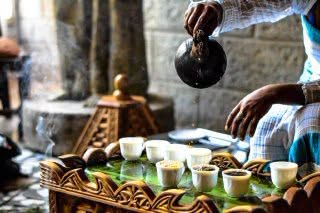
This cultural heritage plays an important role not only in strengthening social relationships within the country but also in attracting international visitors and tourists to Ethiopia. It offers foreign guests an opportunity to experience the country’s rich traditions, hospitality, and cultural identity firsthand.
The experience of witnessing and enjoying traditionally brewed Ethiopian coffee, prepared and served in a Jebena, creates an unforgettable combination of culture, tradition, and flavor. For many visitors, it leaves lasting memories and a distinctive impression of Ethiopia.
Today, Ethiopia is using its historic and cultural coffee ceremony as a means of strengthening its national image by connecting its traditional heritage with international coffee trade and tourism opportunities. By combining its position as one of the world’s leading coffee-producing nations with the distinctive flavors of its coffee and the richness of its cultural heritage, Ethiopia continues to strengthen its competitiveness and enhance its recognition on the global stage.
Ethiopia’s unique contribution lies in transforming a natural gift into a beautiful expression of social interaction, cultural identity, and human connection. Preserving this extraordinary cultural heritage and promoting it to the international community is therefore a shared national responsibility for all citizens.
By Leta Teresa
