AMN PLUS-June 22, 2026
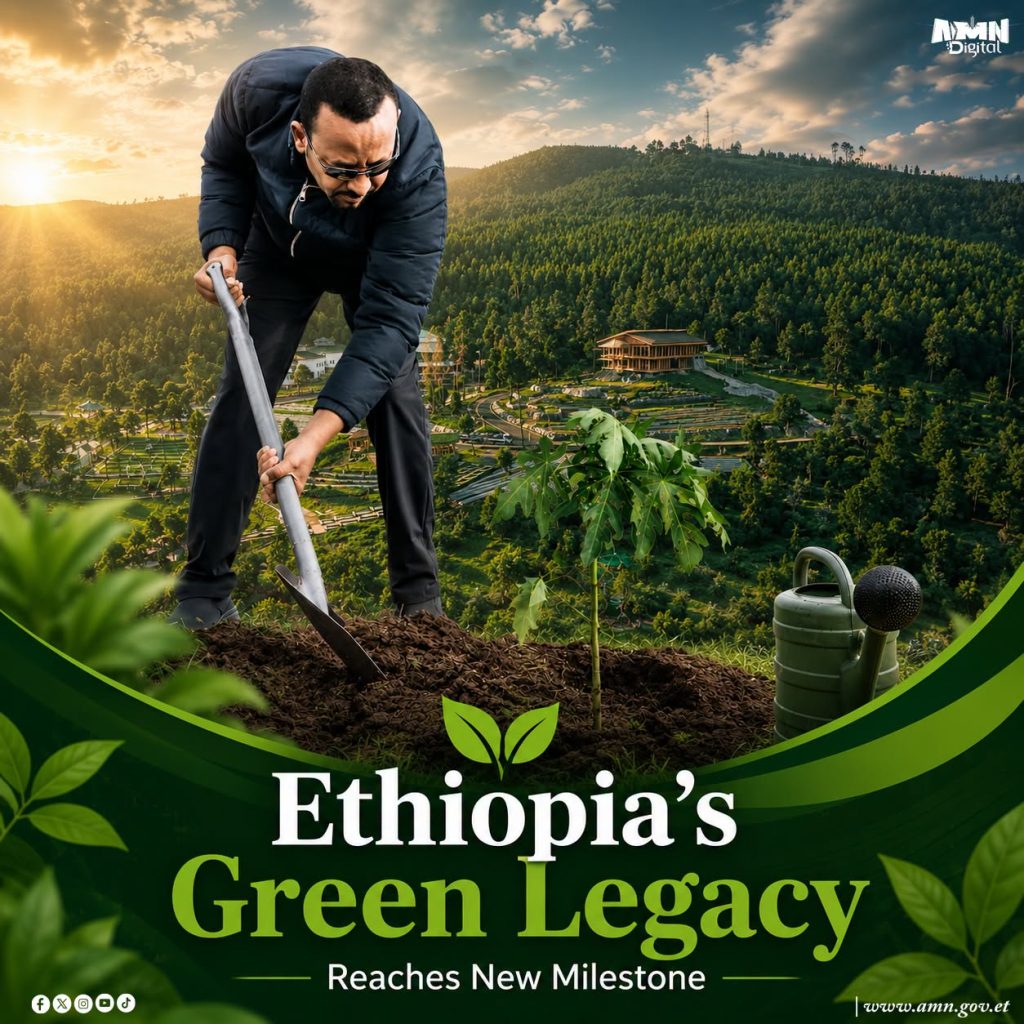
Ethiopia’s Green Legacy Initiative (GLI) is a nationwide environmental restoration program launched in 2019 to address deforestation, land degradation, soil erosion, and the impacts of climate change. Introduced under the leadership of Prime Minister Abiy Ahmed (PhD), the initiative combines large-scale reforestation, ecosystem restoration, agroforestry, and public participation as part of the country’s broader efforts to build a climate-resilient green economy. Since its launch, the initiative has mobilized millions of citizens across the country to participate in annual tree-planting campaigns and environmental rehabilitation activities.
Key Objectives
The Green Legacy Initiative was established with several interconnected objectives:
Landscape and Ecosystem Restoration
The program aims to restore degraded landscapes, rehabilitate watersheds, combat desertification, and improve biodiversity through large-scale tree planting and environmental conservation activities.
Food and Nutrition Security
In addition to forest restoration, the initiative promotes agroforestry through the planting of fruit-bearing and fodder trees. This approach seeks to support rural livelihoods, improve food and nutrition security, and contribute to sustainable agricultural production.
Climate Change Mitigation
The initiative forms part of Ethiopia’s Climate-Resilient Green Economy strategy by increasing forest cover and enhancing carbon sequestration. Trees planted under the initiative have sequestered an estimated 297 million tons of carbon dioxide.
The Green Legacy Achievements
According to official data, the Green Legacy Initiative has produced a range of environmental and socioeconomic outcomes since 2019.
Environmental Impact
More than 48 billion tree seedlings have been planted nationwide. National forest cover has increased from 17.2 percent to 23.6 percent through sustained efforts. Watershed rehabilitation efforts have contributed to reducing soil erosion and improving environmental conditions in degraded areas.
Large-scale tree planting has expanded the country’s carbon sequestration capacity.
Socioeconomic Contributions
Hundreds of thousands of 120,000 nursery sites have been established. The initiative is reported to have created 1.2 million green jobs, with women and youth accounting for around 60 percent of beneficiaries. Agroforestry activities have included the cultivation of fruit trees such as avocado, mango, papaya, and apple, as well as coffee seedlings, supporting household income generation and food production.
Public Participation
Ethiopia’s Green Legacy Initiative (GLI) mobilizes an average of 20 to 25 million citizens annually across urban and rural areas. This mass public participation includes seedling production, mass tree-planting drives, and broader environmental conservation activities like soil and water management. Environmental restoration efforts have also been incorporated into urban development programs, including riverside rehabilitation, corridor development projects, and urban greening initiatives.
Regional and International Dimensions
The Green Legacy Initiative has attracted international attention as one of Africa’s largest reforestation programs. Ethiopia has also distributed millions of climate-resilient seedlings to neighboring countries, including Djibouti, South Sudan, and Kenya, as part of regional environmental cooperation efforts.
The expansion of forest resources is also expected to strengthen opportunities for participation in international carbon market mechanisms and other climate-finance initiatives.
The 2026 Green Legacy Campaign
Ethiopia officially launched the 2026 Green Legacy Initiative on June 15, setting a target of planting 8 billion seedlings during the current rainy season. Achieving this target would raise the cumulative number of seedlings planted since 2019 to more than 50 billion and advance the country’s long-term goal of planting 65 billion seedlings. Prime Minister Abiy Ahmed announced that more than 8 billion seedlings had been prepared for the planting season and stated that nationwide preparations had been completed. He also called for continued public participation in the campaign.
According to official reports, the initiative has contributed to expanding forest cover, supporting environmental rehabilitation, creating employment opportunities, and promoting agroforestry over the past seven years. The 2026 campaign represents the latest phase of Ethiopia’s ongoing efforts to address environmental degradation and strengthen climate resilience through large-scale restoration activities.
By Leta Teresa