AMN Plus-June 24, 2026
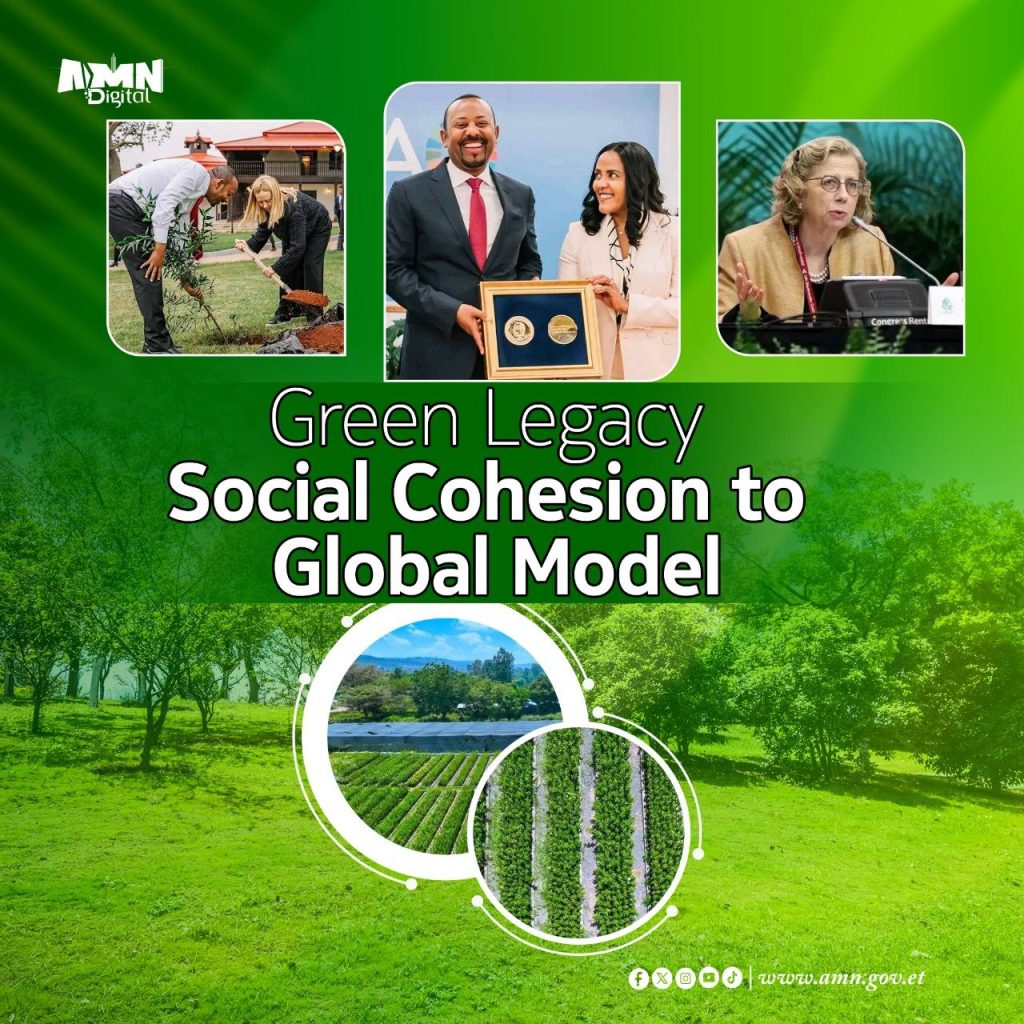
Ethiopia’s Green Legacy Initiative has evolved into one of the largest environmental restoration campaigns in the world, opening a new chapter in environmental protection, climate action, food security, and national image-building.
Launched in 2019 under the leadership of Prime Minister Abiy Ahmed (PhD), the initiative has grown into a nationwide movement that mobilizes millions of Ethiopians every year during the rainy season. The campaign reflects the country’s commitment to combating climate change, restoring degraded ecosystems, and creating a sustainable future for coming generations.
Since its inception, Ethiopians have planted more than 48 billion tree seedlings across the country. This unprecedented effort has contributed significantly to restoring degraded landscapes, rehabilitating watersheds, and increasing Ethiopia’s forest cover from approximately 17 percent to 23.6 percent.
The initiative has demonstrated that large-scale environmental restoration is possible when governments, communities, institutions, and citizens work together toward a shared objective.
✍️Restoring Ecosystems and Combating Climate Change
The environmental benefits of the Green Legacy Initiative are substantial. Billions of trees planted throughout the country have helped reduce soil erosion, restore degraded lands, improve groundwater recharge, and revitalize rivers and water sources that are essential for agriculture and human livelihoods.
The initiative also contributes significantly to climate change mitigation efforts by increasing carbon sequestration and reducing greenhouse gas concentrations in the atmosphere. At a time when the world is grappling with the devastating impacts of climate change, Ethiopia’s large-scale tree-planting campaign serves as an important example of locally driven environmental action with global significance.
Beyond their climate benefits, the restored ecosystems support biodiversity conservation, improve habitat conditions for wildlife, and enhance the resilience of communities to droughts and other climate-related challenges.
✍️Strengthening Food Security and Economic Growth
The Green Legacy Initiative extends beyond environmental restoration. It has become an important pillar of Ethiopia’s efforts to strengthen food security and create economic opportunities. In addition to indigenous and forest tree species, millions of fruit-bearing and economically valuable plants, including avocado, mango, papaya, coffee, and other crops, have been planted across the country. These efforts have enabled farmers to diversify their livelihoods and generate additional income beyond traditional subsistence agriculture.
The expansion of avocado cultivation has contributed to Ethiopia emerging as the second-largest avocado exporter in Africa. Similarly, increased coffee planting has strengthened the country’s agricultural export sector and boosted foreign exchange earnings.
The initiative has also created employment opportunities for millions of Ethiopians engaged in seedling production, nursery management, transportation, planting, maintenance, watershed rehabilitation, and environmental conservation activities. These green jobs have provided income sources for youth, women, and rural communities while supporting national development goals.
✍️Building Social Cohesion and Environmental Awareness
One of the most remarkable achievements of the Green Legacy Initiative is its ability to unite Ethiopians around a common national cause.
Every year, citizens from all walks of life, including government officials, community leaders, religious institutions, students, farmers, private-sector actors, and members of the diaspora, participate in tree-planting campaigns.
Regardless of differences in ethnicity, religion, age, or social background, millions come together to contribute to a shared vision of environmental stewardship. As a result, the initiative has strengthened social cohesion and fostered a culture of collective responsibility. More importantly, it has helped cultivate environmental awareness among citizens, encouraging long-term care and protection of natural resources beyond the annual planting season.
✍️Enhancing Ethiopia’s Global Standing
The Green Legacy movement has also become a significant diplomatic and international success story. By planting billions of seedlings within a relatively short period, Ethiopia has gained global recognition as a leader in environmental restoration and climate action.
The initiative has elevated Ethiopia’s profile on the international stage and showcased the country’s commitment to sustainable development. Prime Minister Abiy Ahmed has received various international recognitions related to environmental leadership, including the World Food and Agriculture Award and the Special African Leadership Award.
Ethiopia’s growing reputation in climate and environmental diplomacy is further reflected in several major international milestones. These include the country’s selection to host the Second Africa Climate Summit, its hosting of the Second United Nations Food Systems Summit, recognition received during the 80th Conference of the Food and Agriculture Organization (FAO) for sustainable forest development efforts, and its bid to host the 32nd United Nations Climate Change Conference (COP32). These achievements demonstrate how environmental initiatives can contribute not only to ecological restoration but also to strengthening a nation’s international influence and diplomatic engagement.
✍️A Legacy for Future Generations
The Green Legacy Initiative is far more than a tree-planting campaign. It represents a historic national investment in the future of Ethiopia. The trees planted today will provide future generations with cleaner air, healthier ecosystems, sustainable sources of food, enhanced water security, and greater resilience to climate change. As the initiative continues to expand, attention must increasingly focus on ensuring the survival and long-term management of planted seedlings. Sustainable success depends not only on the number of trees planted but also on their growth, protection, and contribution to local ecosystems and livelihoods.
✍️Priorities for the Future
🔴To maximize the long-term impact of the Green Legacy Initiative, several priorities deserve continued attention
🔴Strengthening public ownership and nurturing a lasting culture of environmental responsibility
🔴Expanding alternative and renewable energy sources to reduce dependence on forest resources
🔴Enhancing research and evidence-based policymaking to identify and address legal, institutional, and implementation gaps
🔴Improving coordination among government institutions, development partners, communities, and the private sector
🔴Expanding sustainable forest management and monitoring systems
🔴Increasing investments in climate-smart agriculture and watershed restoration
🔴Ensuring that seedlings planted during the rainy season receive adequate care, protection, and maintenance during dry periods
🔴Maximizing the economic benefits of green development through value-chain expansion, agroforestry, and market access for farmers.
Conclusion
The Green Legacy Initiative stands as one of Ethiopia’s most ambitious and transformative national programs. Through environmental restoration, economic empowerment, food security enhancement, climate action, and social mobilization, the initiative has demonstrated the power of collective action in addressing some of the most pressing challenges of our time. As Ethiopia continues its journey toward sustainable development, the Green Legacy Initiative will remain a cornerstone of national progress and a lasting symbol of the country’s commitment to building a greener, more resilient, and prosperous future.
By Birhanu Workneh