
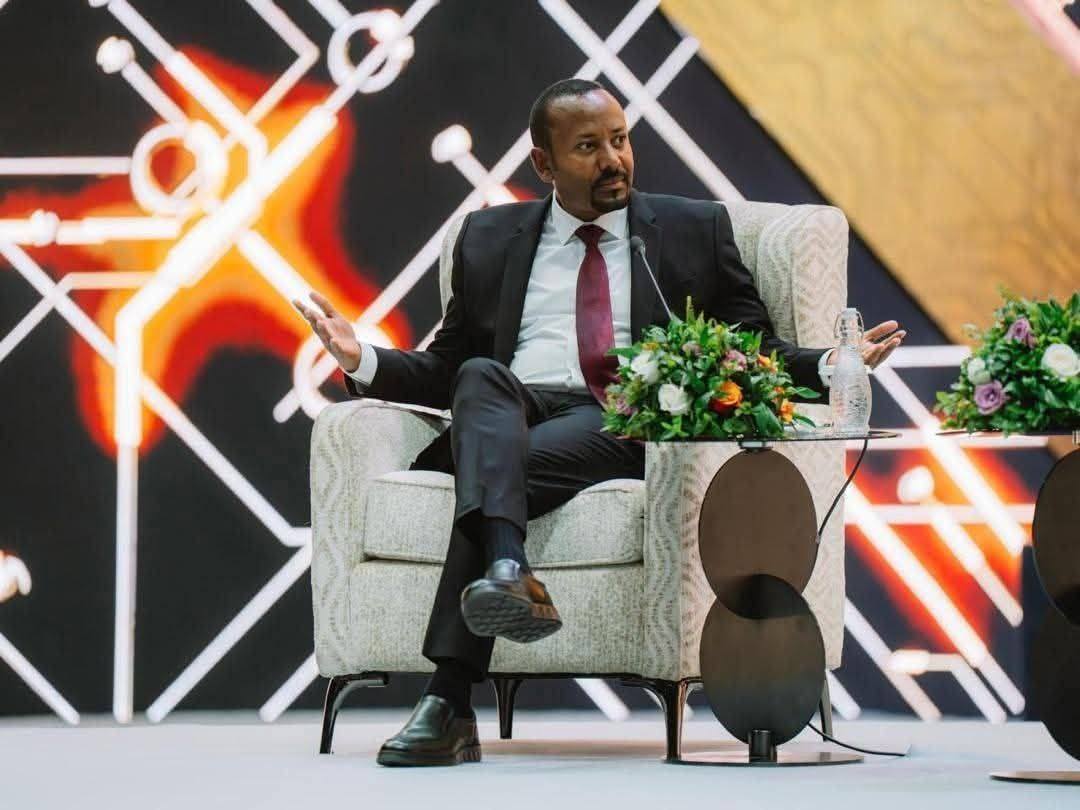
Ethiopia has officially launched the Digital Ethiopia 2030 Strategy, marking a significant step toward national digital transformation.
Speaking at the launch ceremony, Prime Minister Abiy Ahmed emphasized that data sovereignty is dynamic and continues to evolve over time, underscoring the government’s strong commitment to digitalization across the country.
The Prime Minister reflected on historical challenges, noting that a century ago, organized armed forces seized land from the people, whereas today, such threats no longer exist in the same form. However, the Prime Minister warned that imported ideas and ideologies now pose serious risks to national stability and sovereignty.
Highlighting the dangers of external dependency, Abiy Ahmed stated that implementing foreign ideologies without critical adaptation can create national crises. In response, the government has designed and implemented a homegrown philosophy tailored to Ethiopia’s unique context and aspirations.
Reaffirming the link between self-reliance and sovereignty, the Prime Minister stressed that nations dependent on others for basic necessities cannot truly speak of sovereignty.
The Prime Minister reiterated that reliance on foreign wheat imports undermines national independence. Addressing the realities of the Artificial Intelligence era, Abiy Ahmed described data as the most valuable resource of modern nations. He explained that access to accurate data, such as information on the spread of common illnesses, enables effective analysis, informed decision-making, and efficient disease prevention.
The Prime Minister further emphasized that data sovereignty is inseparable from national sovereignty. He warned that if Ethiopia does not produce its own medicines, those who control the data will dominate healthcare systems and, ultimately, the population itself.
“Protecting data is like protecting natural resources such as water and gold,” Prime Minister Abiy Ahmed concluded, stressing the critical importance of safeguarding national data in the digital age.
By Birhanu Workneh
